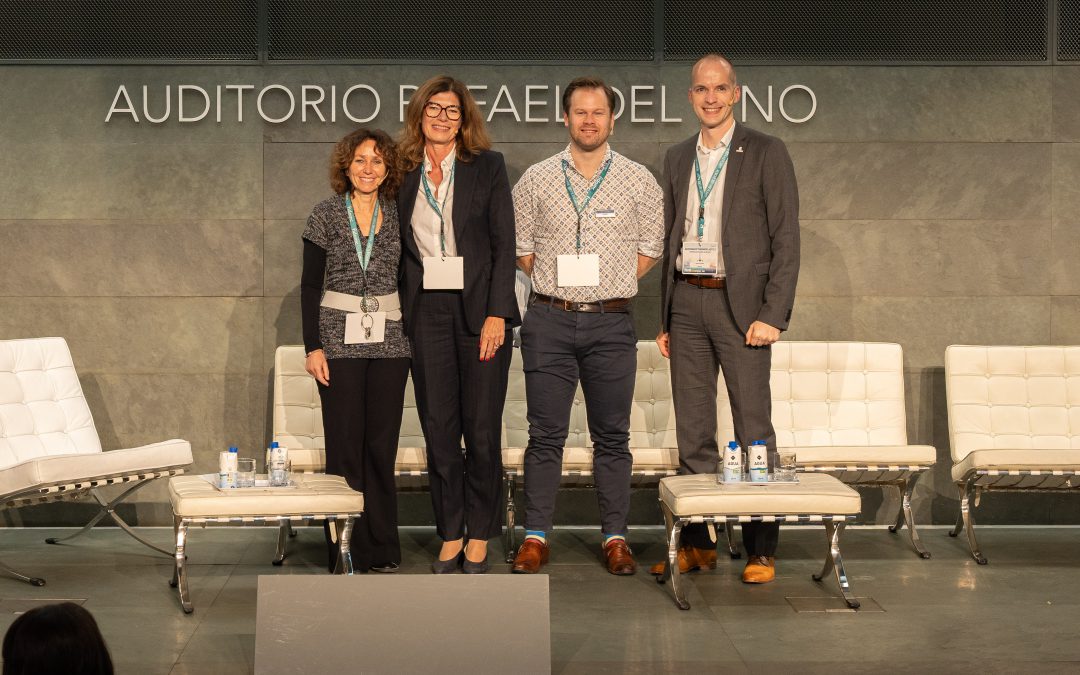
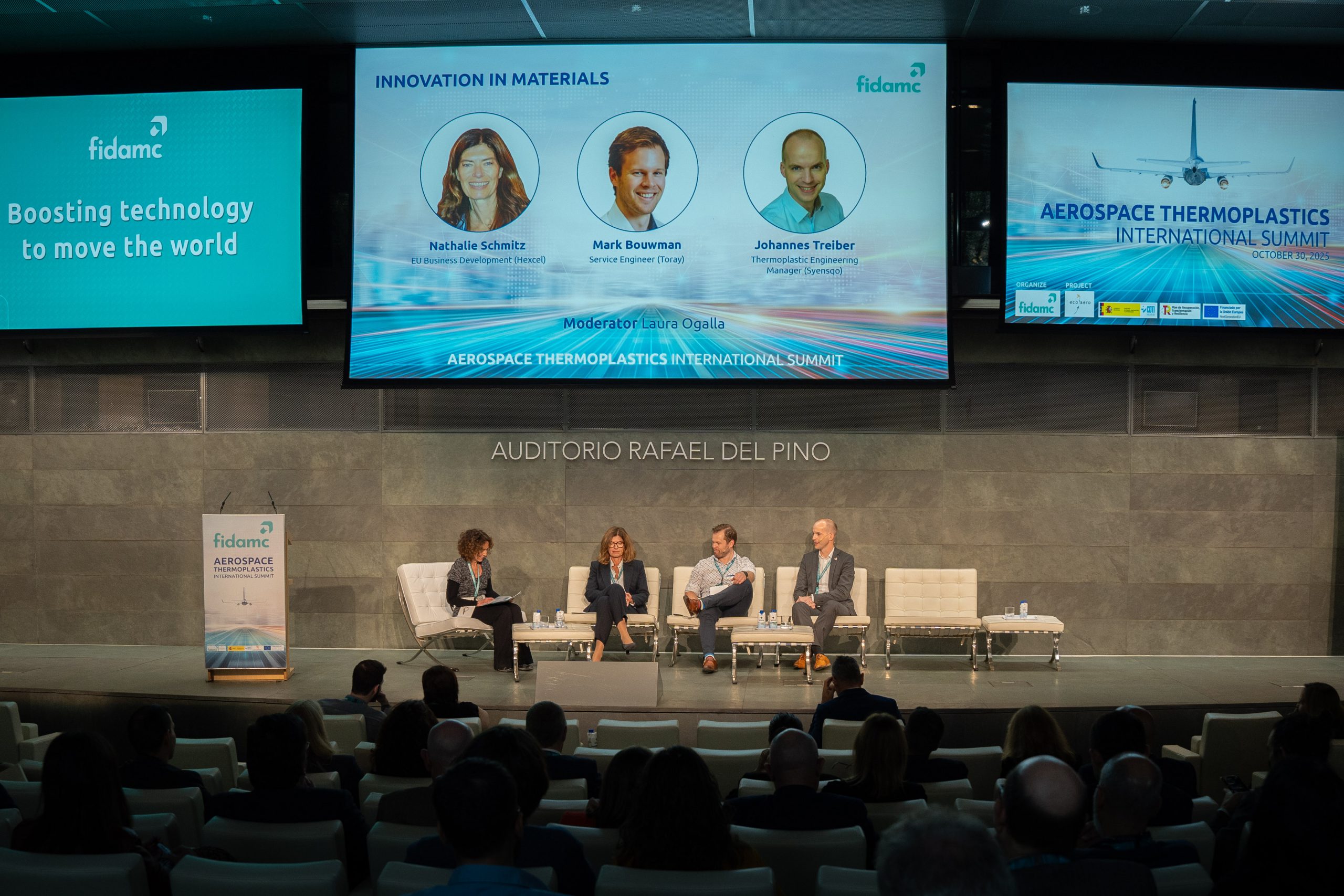
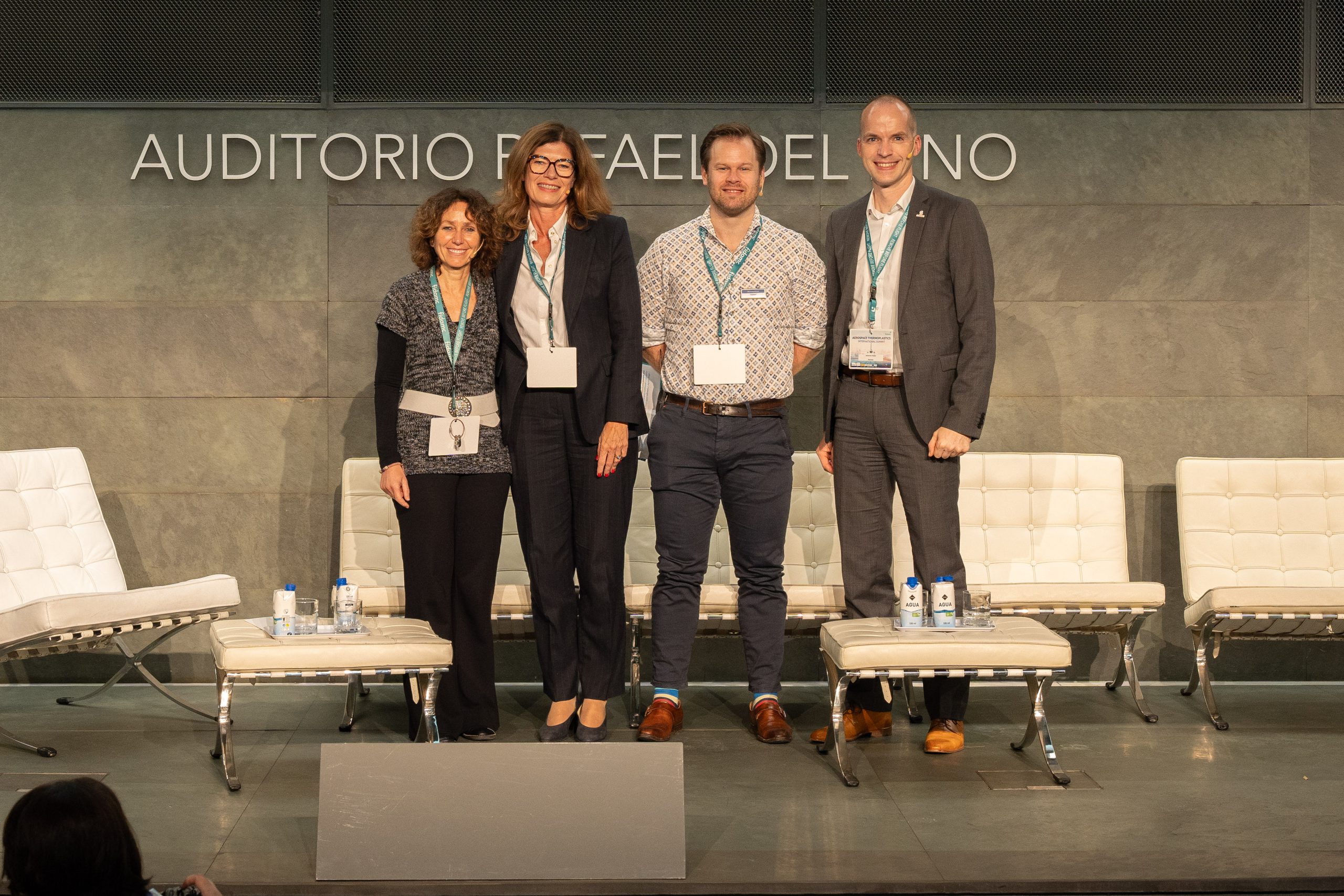
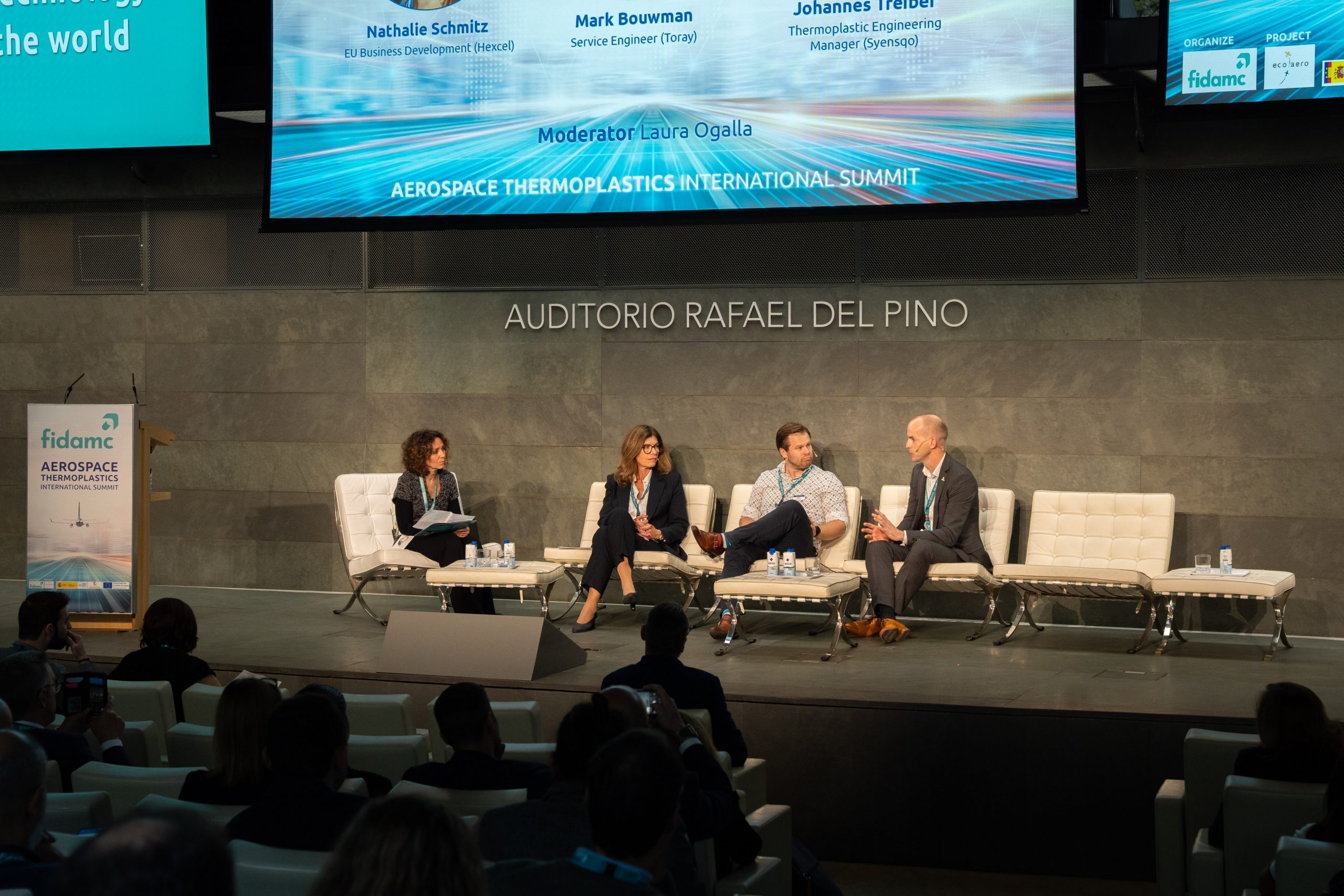
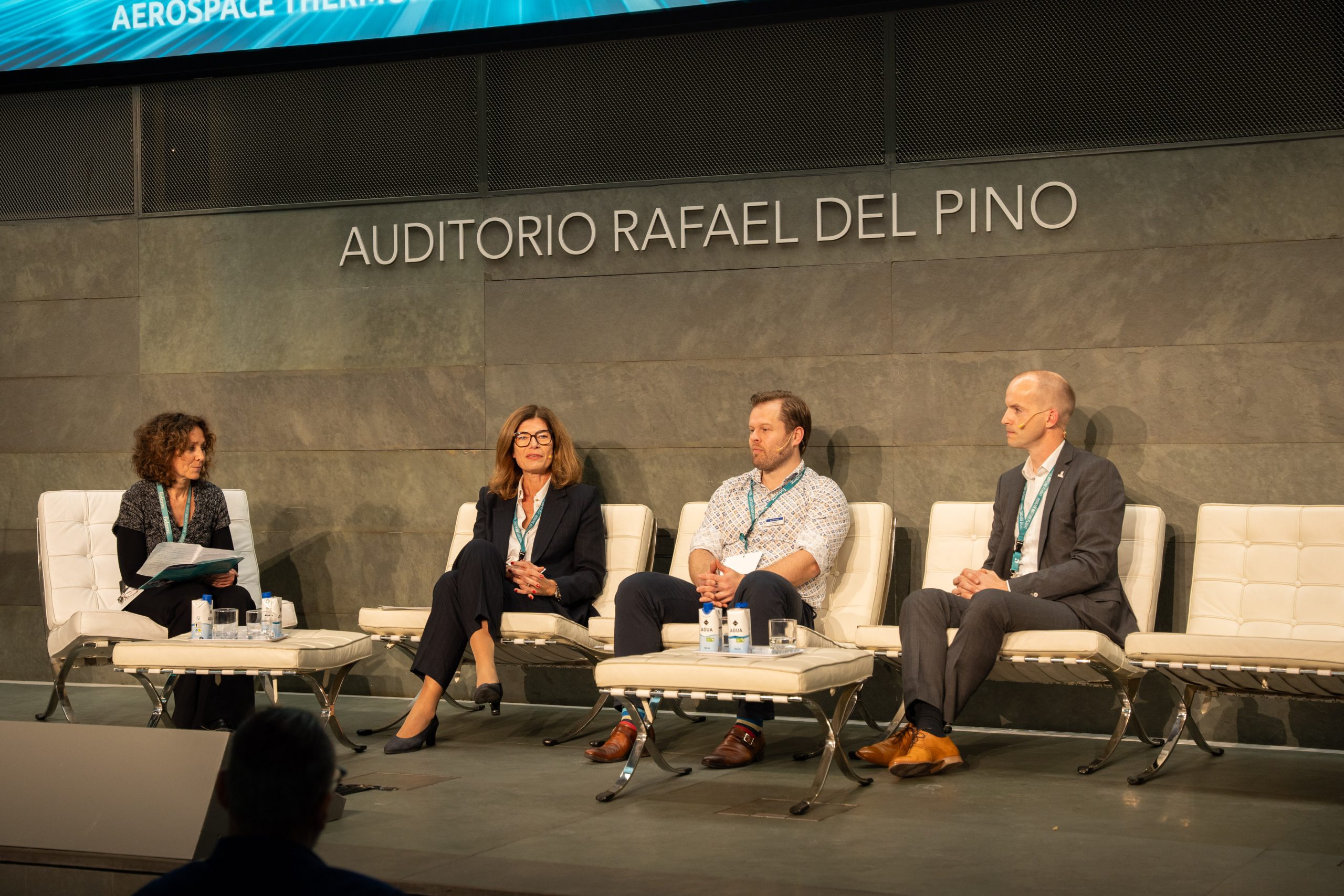
The fifth round table at the Aerospace Thermoplastics International Summit brought together three leading figures from the advanced materials industry: Nathalie Schmitz (EU Business Development – Hexcel), Mark Bouwman (Service Engineer – Toray) and Johannes Treiber (Thermoplastic Engineering Manager – Syensqo). The debate, moderated by Laura Ogalla Escolano, Senior Project Manager at Fidamc, focused on the challenges and opportunities of innovation in thermoplastic materials within the aerospace sector.
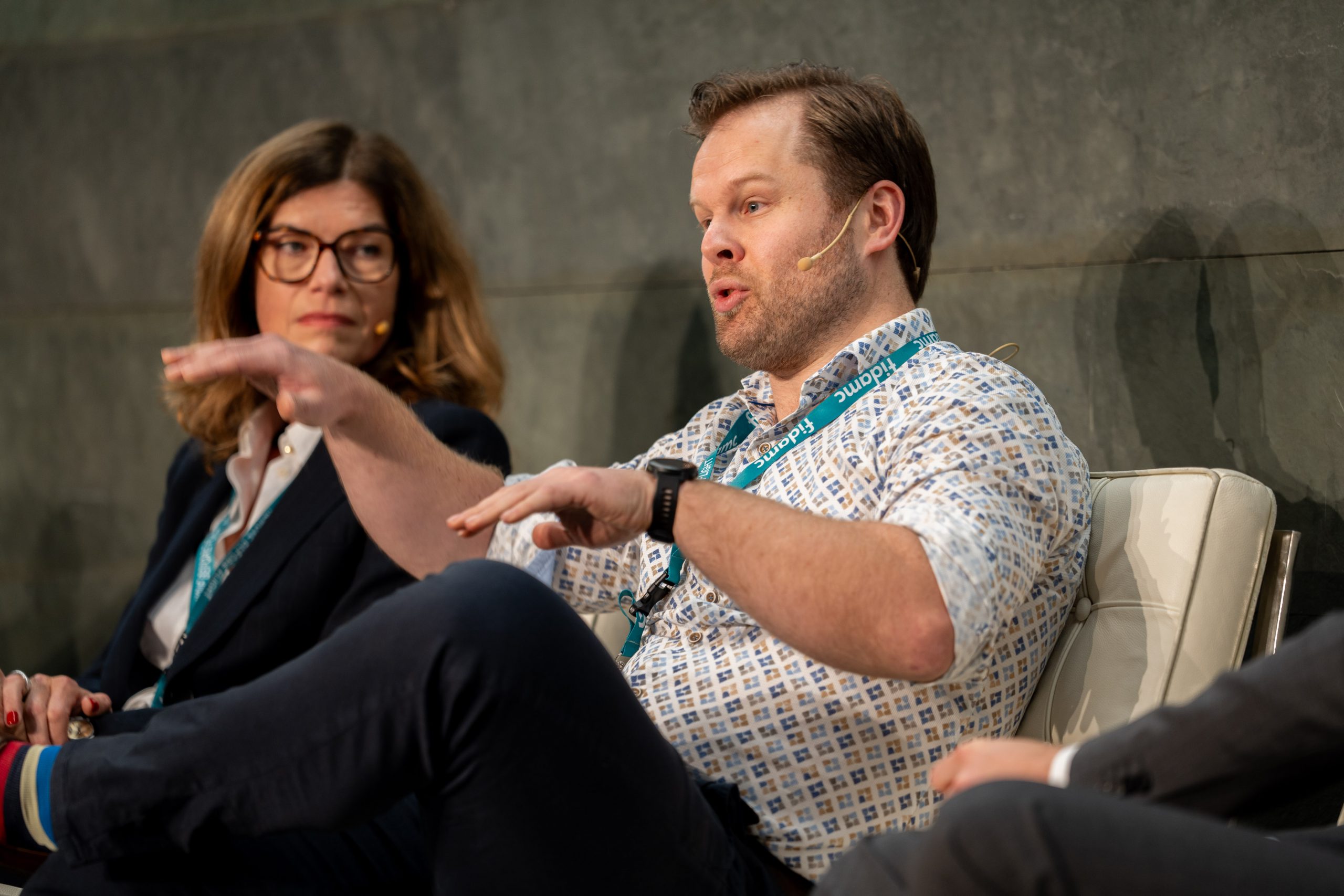
The first to speak was Mark Bouwman, who emphasised that thermoplastic materials require a very different approach to thermoset materials: "Processing thermoplastic materials requires a different mindset. It requires specific knowledge in terms of how to process these materials."
Bouwman emphasised that the success of the material depends largely on its correct processing, as "the process can have a decisive influence on the mechanical properties of the material." For the Toray engineer, collaboration with technology and research centres is key to optimising these processes and "acting as a knowledge hub" that unifies best practices among manufacturers and users.
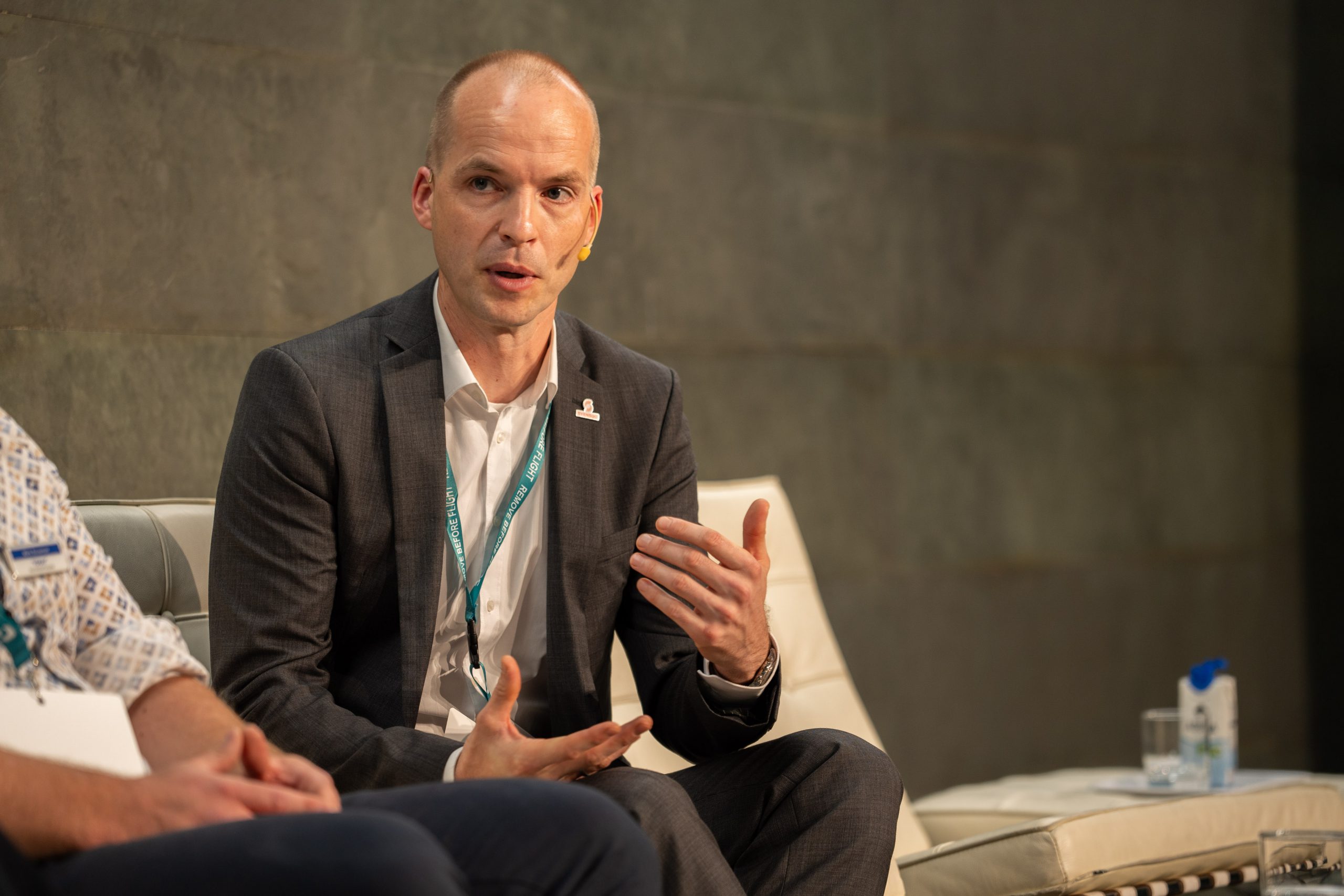
For his part, Johannes Treiber agreed on the importance of the process, but added that the current challenges go beyond technology. "We have three challenges that we need to address: processability, the commercial advantage of the material, and clarity about the real needs of the industry." Treiber explained that the market is still consolidating its understanding of the optimal manufacturing parameters, from thermal cycles to porosity, and stressed that the scale of production will be decisive in achieving economic competitiveness: "As we scale up production, we are confident that more robust manufacturing will enable us to significantly reduce costs."
From Hexcel, Nathalie Schmitz provided a perspective focused on sustainability and production efficiency. "It is a material that does not require special storage conditions, so its carbon footprint is lower." Schmitz pointed out that thermoplastics offer significant environmental advantages over thermosets by eliminating the need for refrigeration or waste such as protective paper. She also highlighted their potential to improve the repairability and recyclability of parts, paving the way for more circular and responsible production.
In terms of cost, Schmitz emphasised the need to think about the total cost of the component rather than the price of the material: "Thermoplastics are going to reach new levels, but we have to start somewhere. We need courageous people who are willing to take risks and make it happen."
The debate concluded with a joint reflection on the importance harmonising standards and certifications to reduce costs and accelerate the adoption of new technologies. As Bouwman summarised, "if all customers have different requirements for certifying a material, the amount of testing is enormous. More standardisation would help reduce costs and implement new applications."
The session made one thing clear: innovation in thermoplastic materials depends not only on technical advances, but also on cross-disciplinary collaboration between manufacturers, technology centres and regulatory bodies. In the words of moderator, Laura Ogalla, the common goal is to "ensure that the full potential of these materials is fully developed".

Innovation in materials_1
Innovation in materials_2
Innovation in materials_3
Innovation in materials_4
Innovation in materials_5
Innovation in materials_6
Innovation in materials_7

 English
  Spanish