
Robotics
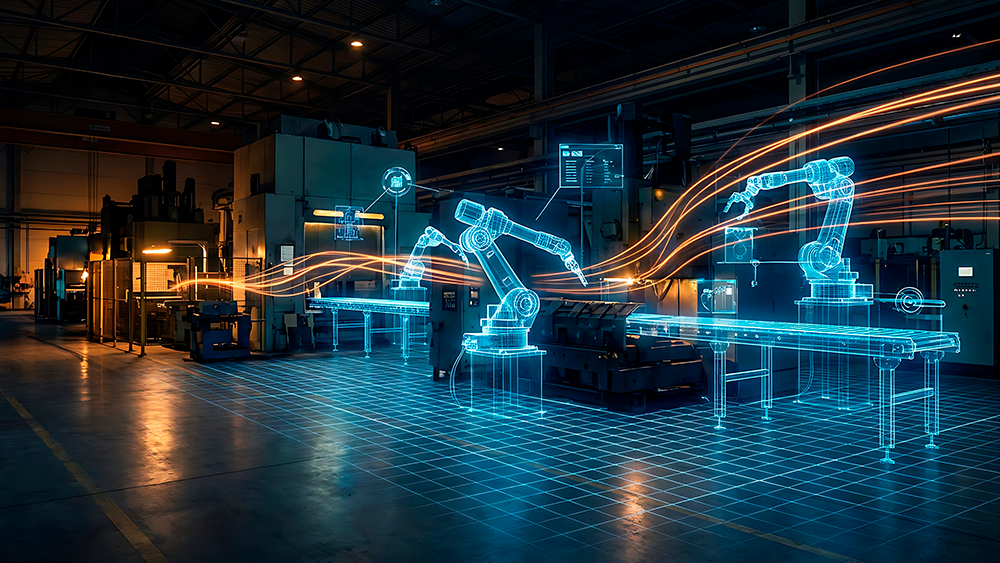
Robotics is a cornerstone of advanced manufacturing, thanks to its ability to improve efficiency, precision and safety in production processes across a wide range of sectors.
FIDAMC has developed a high level of specialisation in robotics relating to the automation of manufacturing and assembly processes involving composite materials, as well as AI systems and digital twins for industrial applications.
At the CFA, managed by FIDAMC, robotics plays a strategic role in driving innovation and competitiveness amongst companies and is used in various areas:
- Automation of repetitive and complex processes: Industrial robots enable tasks such as drilling, assembly or material handling to be carried out with greater efficiency and precision than traditional methods.
- Inspection and quality control: Robotic systems equipped with advanced sensors and high-resolution cameras are used for the automated inspection of components. These systems ensure that products meet the most stringent standards, reducing errors and optimising production times.
- Additive manufacturing and advanced processes: In combination with technologies such as 3D printing, robots play an essential role in the manufacture of complex, lightweight parts, which are crucial for reducing weight and improving the performance of aircraft and vessels. The CFA is equipped with state-of-the-art machinery for working with a variety of materials using the most advanced robotics technologies.
The CFA is equipped with state-of-the-art machinery for working with a variety of materials using the most advanced robotics technologies.
Metrology and digitalization
Metrology and digitisation play a key role in ensuring the quality of manufacturing processes and improving design processes. These areas help to ensure that manufactured parts meet the strict specifications required.
Metrology focuses on the precise measurement of manufactured parts, an essential step in validating production processes. At the CFA, this control is carried out using the most advanced metrology machinery. These tools enable the verification of functional dimensions, lengths, angles, geometric tolerances and surface finishes, ensuring that every component meets the most exacting standards. Having state-of-the-art measuring equipment is essential at the advanced level of technological maturity (MRL) at which the CFA operates, where prototypes are very close to becoming final products.
Digitalisation complements metrology by integrating measurement processes into virtual environments which facilitate the inspection, analysis and traceability of parts. At the CFA, digitalisation enables the capture of precise data on each component and its transformation into digital models that optimise design, reduce development times and improve the accuracy of analyses.
 English
  Spanish