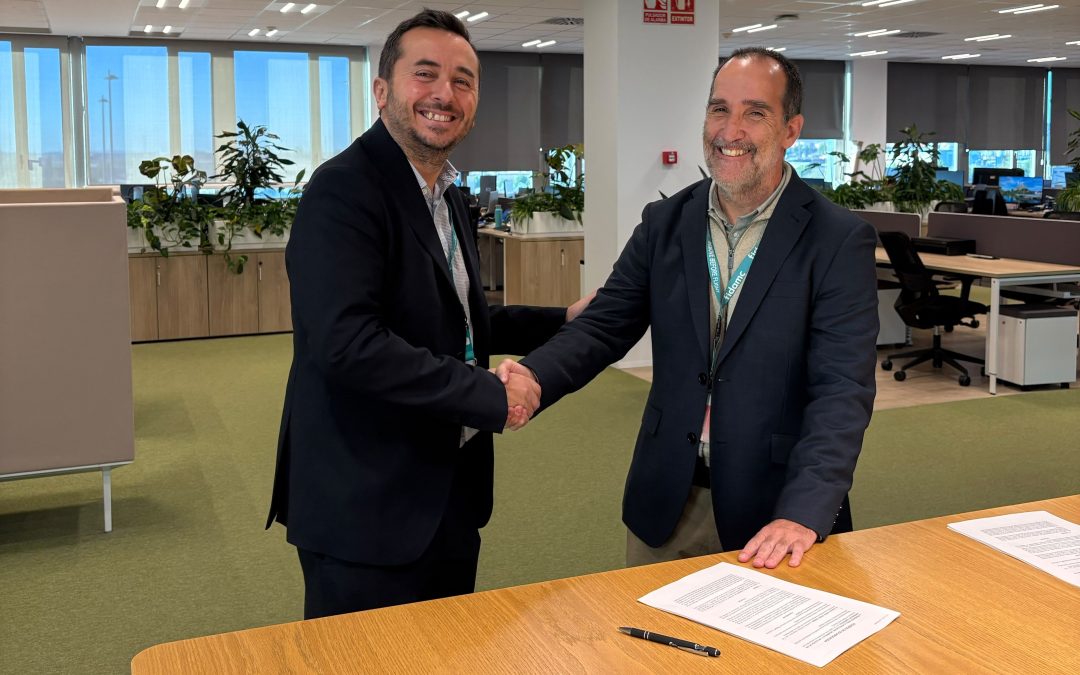
Sopra Steria, a recognised European leader in consultancy, digital services and software development, and FIDAMC, a leading centre for research and development in composite materials and industrial robotics, have signed a collaboration agreement to promote Physical AI — artificial intelligence that perceives, reasons and acts in the physical world through robots — within the European composites industry.
La transformación industrial europea se apoya cada vez más en tecnologías capaces de combinar automatización, inteligencia artificial y conocimiento experto. En sectores de alta exigencia como el aeronáutico, espacial y de defensa, la Physical AI permitirá que los robots comprendan mejor la variabilidad inherente a los procesos de fabricación de composites y se adapten de forma autónoma a cada operación, mejorando la eficiencia y la calidad del resultado final.
The collaboration brings together two complementary areas of expertise: FIDAMC’s experience in composite materials and processes and in industrial robotics, with its robotic cells, and Sopra Steria’s expertise in simulation, digital twins and artificial intelligence. Together, the partners will develop Physical AI solutions: industrial robots capable of perceiving their environment and adapting to variations in parts, trained via simulation before being deployed in a real cell, to improve efficiency, quality and traceability.
"Europe needs to preserve and strengthen its industrial capacity in strategic sectors such as aeronautics, space and defence. Physical AI represents an opportunity to develop technologies that enable the automation of complex processes whilst retaining knowledge and innovation within our industrial ecosystem,” said Rafael de Benito, Director of Aeroline at Sopra Steria. “We are convinced that Physical AI will be one of the major drivers of industrial transformation in the coming years,” he added.
“The aerospace industry continues to rely on numerous processes that are highly manual, complex and difficult to automate using conventional robotics. At FIDAMC, we see Physical AI as an opportunity to take a qualitative leap forward in industrial robotics, by developing systems capable of learning from human experience, perceiving their environment and adapting to changing situations. Our aim is to apply these capabilities to real-world industrial processes, combining the flexibility and expertise of operators with the precision, repeatability and productivity of industrial robots”, said Felix Dominguez, Director of Operations at FIDAMC.
Además, ha destacado que esta colaboración con Sopra Steria «supone un paso importante para desarrollar y validar estas tecnologías en entornos industriales, avanzando hacia la automatización de procesos que hasta ahora resultaban difíciles de robotizar”.
The initial work will be carried out at FIDAMC’s robotised cell in Getafe. The partners will soon be sharing the results with the European industrial ecosystem.
 English
 Spanish